Ciclovia MKE took place in 2015 on Milwaukee’s South Side and connected Clarke Square, Walker Square, and Walker’s Point through an open streets format. The event closed selected roads to automobile traffic and created space for cycling, walking, food, family activity, music, and community participation. Its route showed how public streets can support movement, local culture, and neighborhood interaction.
How Ciclovia MKE Used Public Streets
The event followed the ciclovia idea, a format where selected streets are temporarily closed to cars and opened for people. The word ciclovia comes from Spanish and refers to a cycleway. In Milwaukee, this concept was adapted for a neighborhood event with several kinds of public activity happening along the same route.
South Cesar E. Chavez Drive was closed between Greenfield Avenue and Washington Street. A section of Washington Street also connected toward South Barclay Street and the entrance of the KK River Trail. This arrangement gave cyclists and pedestrians a continuous area where they could move without normal vehicle traffic.
Activities Along the Route
Ciclovia MKE included more than bicycle riding. Families, children, local groups, and visitors used the streets for recreation and social contact. Cool and rainy weather did not stop participation, and different activities continued along the route.
The program included:
- cycling and walking on streets closed to normal traffic
- food vendors serving people along the route
- music and community performances
- children’s games and pavement art
- bicycle repair support and local project displays
Costumed cyclists and pedestrians also appeared during the event. Children used chalk and paint on wet pavement, while community organizations shared information about their work. The street became a place where transport, recreation, art, and neighborhood communication existed together.
Community Role of Ciclovia MKE
Ciclovia MKE supported several local purposes at the same time. The open streets format encouraged physical activity, but it also created direct contact between neighbors. Families could spend time outdoors, people from other parts of Milwaukee could visit the area, and local organizations could meet residents in an informal setting.
The route also passed through a commercial corridor, giving nearby businesses visibility as visitors moved through the neighborhood at walking or cycling speed. This type of event made the street itself part of community life rather than only a space for cars.
Local Meaning and Participation
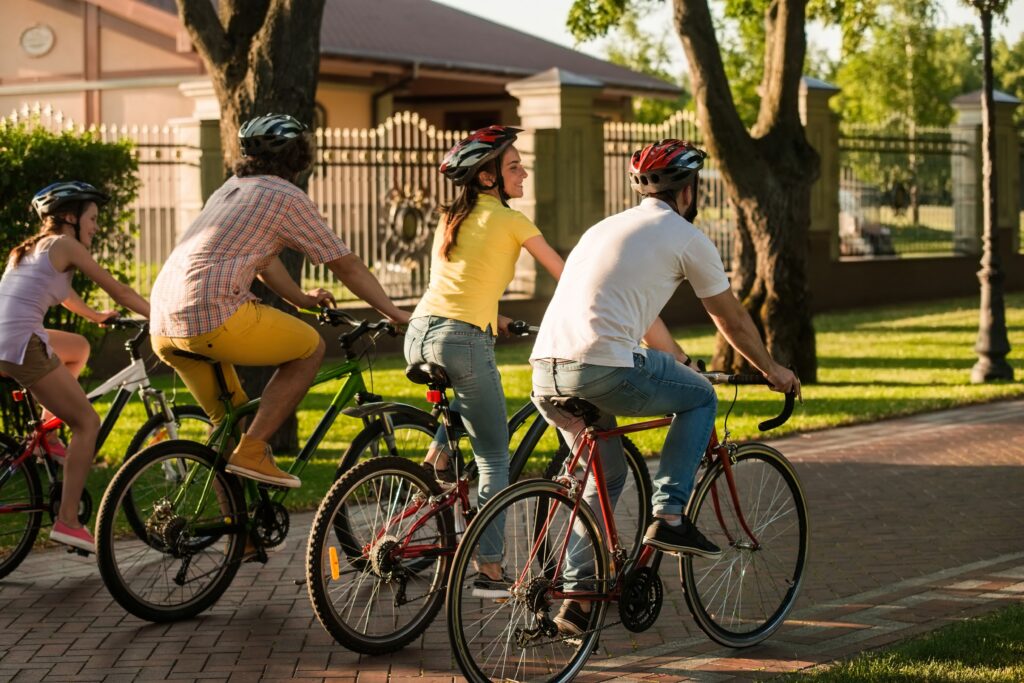
The 2015 event was the first Ciclovia MKE in Milwaukee. Residents joined from nearby blocks and from other city areas, with some families riding bicycles together. For people living close to the route, the event provided recreation and public activity directly inside their neighborhood.
Ciclovia MKE demonstrated a practical model of open streets in Milwaukee. For several hours, road space supported cycling, walking, art, food, play, and conversation. The event also connected different neighborhood areas and showed how temporary traffic changes can create another use for familiar streets. It gave residents a clear example of how street design can briefly support community activity without changing the permanent function of the corridor itself.